
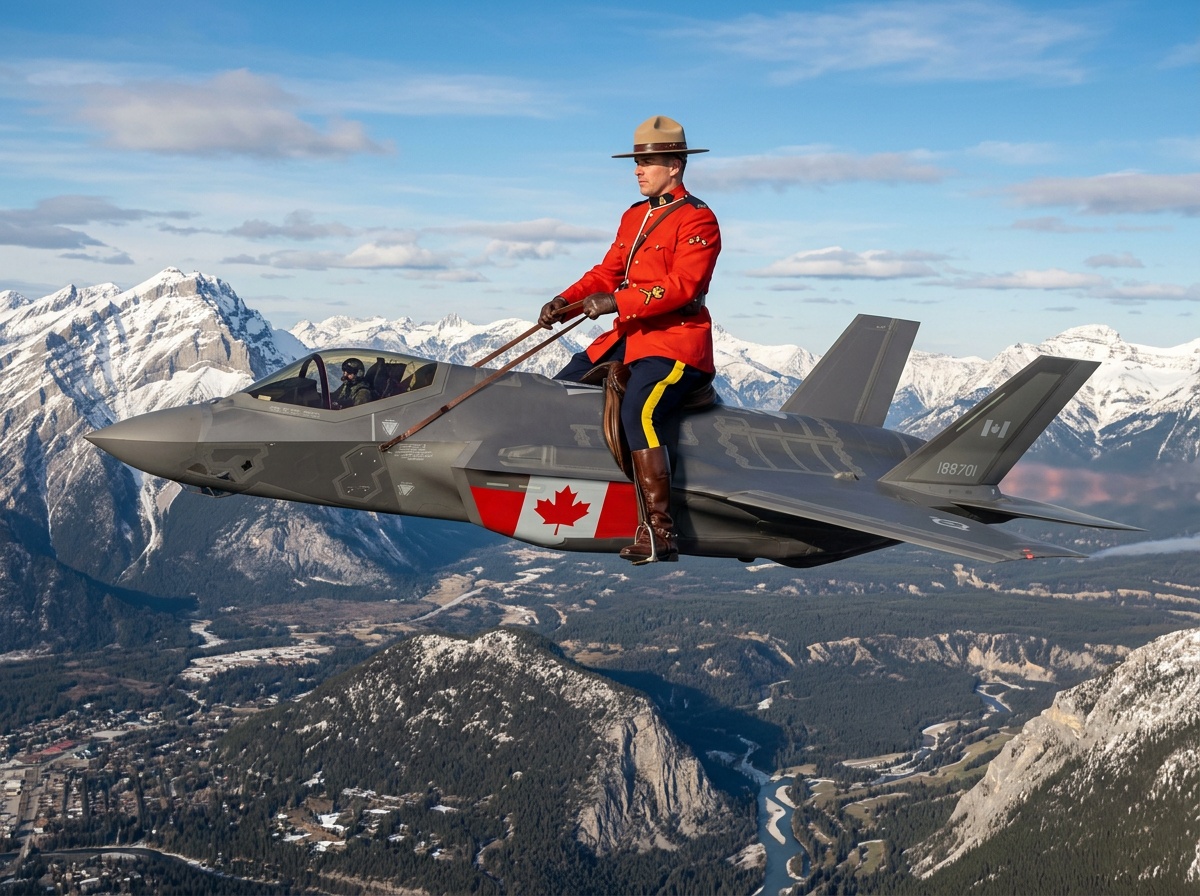
Canada’s drawn-out review of its plan to buy 88 Lockheed Martin F-35 fighter jets has stretched well past its original deadline, and on April 27, 2026, Defense Minister David McGuinty told the Senate’s defense committee that the file remains open with no end date in sight. This article breaks down what McGuinty actually told lawmakers, why the F-35 deal stalled, what Ottawa is weighing against the U.S.-built airframe, how a possible Saab Gripen pivot would reshape the Royal Canadian Air Force, and what the delay means for NORAD, NATO commitments, and the future fighter fleet that Canadian pilots will fly into the 2030s. If you want a clear picture of one of the largest procurement files in Canadian history, you are in the right place.
What Did Canadian Defense Minister David McGuinty Say About the F-35 Deal?
Speaking before the Senate’s defense committee on April 27, Canadian Defense Minister David McGuinty made it plain that Ottawa has not closed the books on its biggest fighter file. Asked when a final answer might come, he declined to commit to any timeline. “The review of the purchase of the F-35s is continuing,” McGuinty said, adding that the government is studying the fighter fleet question with care. 19FortyFive
McGuinty also confirmed that buying aircraft from non-American manufacturers remains a live option. The defence minister told senators that proposals from other governments are part of what the review is weighing, and he gave no signal about when a decision might land. That careful framing matters, because Canada’s national defence file is now tangled with a wider debate over how much the country should depend on a single supplier for its most important military hardware.
The minister did not break new policy ground at the hearing, but his appearance reset expectations. Anyone hoping the cabinet would announce a verdict before summer 2026 walked away disappointed. The takeaway, in McGuinty’s own framing, was patience.
Why Is Canada Still Reviewing the Plan to Buy F-35 Stealth Fighters?
The short answer is politics, trade, and money. In March 2025, Prime Minister Mark Carney ordered a fresh military review of the F-35 deal on the grounds that Canada had grown over-reliant on the U.S. defense industry. The order came as relations between Ottawa and Washington frayed under a returning Trump administration, with tariffs on Canadian exports and pointed comments about Canada’s sovereignty raising eyebrows across the political spectrum.
That review was supposed to wrap by September 2025. It did not. Trade tensions intensified through late 2025 and early 2026, and the longer the review ran, the more space opened up for alternative ideas, including a partial pivot to Sweden’s Saab and the Gripen fighter. Defence Minister David McGuinty said on Monday that aircraft from other countries remain under active consideration, which keeps the door open for a split outcome.
The political logic is straightforward. Carney’s government wants to be seen weighing every angle of an acquisition this large, especially when the supplier sits south of an increasingly tense border. The defense minister says the delay reflects diligence, not indecision, although critics argue that the longer the review drags, the harder it becomes to deliver a coherent fleet on time.
How Did the Original F-35 Deal Come Together in Early 2023?
Canada’s path to the F-35 was anything but smooth. After more than a decade of restarted competitions, cost overruns, and political flip-flops, Justin Trudeau’s government finally signed a contract in early 2023 to acquire 88 F-35A fighter aircraft from Lockheed Martin. The deal carried a price tag of roughly C$19 billion, or about $13.9 billion in U.S. dollars, and it was framed as the only realistic replacement for the aging CF-18 fleet that the Royal Canadian Air Force had been flying since the 1980s.
The original procurement plan called for first deliveries to roll in over the late 2020s, with the new fleet fully operational well before 2032. That schedule was tight even before the current review, because pilot conversion, simulator buildouts, and infrastructure upgrades at RCAF bases all needed to happen in parallel with airframe deliveries.
The 2023 announcement was supposed to end years of indecision. Instead, it set the stage for the next round of debate, which arrived almost as soon as the political weather changed.
What Is the Full F-35 Purchase Actually Worth to Canada?
The headline figure is $13.9 billion U.S., but the real cost picture is broader. The contract to purchase 88 F-35 fighter jets covers airframes, initial spares, training, and a slice of sustainment, while lifetime operating costs over thirty-plus years push the total well past the sticker price. That is normal for any modern fighter jet program, since stealth coatings, engine overhauls, and software updates accumulate across the life of every airframe.
There is also a Canadian aerospace angle that often gets lost in the political coverage. Canadian firms supply parts and subassemblies that flow into Lockheed Martin F-35 fighter jets on the production line, which means a full F-35 purchase carries domestic industrial benefits beyond the flightline. A pivot away from the program would force Ottawa to rebuild those benefits through a different supplier, almost certainly Saab.
McGuinty has told reporters that part of the current work involves a careful look at every industrial benefit on offer. That is the polite way of saying any final answer has to make sense to Canadian workers as well as to Canadian pilots.
Could Canada Switch to the Saab Gripen Instead?
The Saab Gripen E was the runner-up in the original Canadian competition, and it has stayed in the conversation ever since. Sweden’s Saab has aggressively positioned its aircraft as a sovereign-friendly alternative, with offers including local assembly, deep technology transfer, and a path to participate in Saab’s next-generation combat aviation program known as KFS. For a country worried about reliance on the United States, that pitch lands.
On paper, the Gripen is cheaper to operate per flight hour than the F-35, easier to deploy from austere strips, and built around an open architecture that makes upgrades less painful. On the other hand, internal evaluation data released in late 2025 showed that the F-35 outscored the Gripen by a wide margin across every major capability category in the original tender. Stealth, sensor fusion, and networked combat are areas where the F-35 simply does things the Gripen cannot.
That gap is why most Canadian military planners are reluctant to scrap the program outright. Gripens would fill many roles well, but they would not give the Royal Canadian Air Force a true fifth-generation edge in contested airspace.
What Would a Mixed Fleet of Fighter Jets Look Like?
A mixed fleet has emerged as the compromise everyone keeps circling back to. Under that scenario, Canada keeps the 16 F-35s it has already legally committed to, then fills the rest of the requirement with Saab Gripen fighters, perhaps in a 16-and-72 or a 40-and-48 split. That structure would address the political concern about U.S. dependence while preserving at least a small high-end stealth capability.
The operational price of running two completely different fighter aircraft is significant. Two pilot training pipelines, two logistics chains, two sets of weapons integrations, and two maintenance ecosystems are not cheap, and they tend to eat the savings that drove the split in the first place. U.S. Ambassador to Canada Pete Hoekstra has argued publicly that Canada cannot afford two parallel programs, a view shared by many former RCAF officers.
Even so, a mixed fleet keeps options open. It hedges against political risk, gives Saab a foothold in North America, and leaves room for Canadian aerospace firms to tap into a European partnership while maintaining ties to the U.S. supply chain.
How Does the F-35 Review Affect NORAD and NATO Commitments?
This is where the review stops being a procurement story and becomes a strategic one. Canada is the only foreign partner inside the North American Aerospace Defense Command, the binational arrangement that watches the skies over the continent every minute of every day. NORAD interceptor squadrons are designed to plug straight into U.S. command and control, and any move away from a common fleet of fighter jets adds friction.
Hoekstra warned earlier this year that backing out of the F-35 deal could complicate the NORAD partnership and might force Washington to deploy its own US fighter jets into Canadian airspace to cover any capability gap. McGuinty has pushed back on that framing, arguing in interviews that the relationship remains healthy and that NATO’s collective defense commitments are still being met.
NATO’s two percent of GDP defense spending target adds another layer. Ottawa has pledged to hit that mark by March 2026, and a clean F-35 program is one of the easier ways to show that the money is being spent on capability rather than on studies. Every additional month the review continues is another month NATO allies wait to see Canada’s hand.
Why Are 16 F-35s Already Locked In?
Even if Carney’s cabinet wanted to walk away from the program tomorrow, it could not without writing a very large check. Ottawa has made a binding legal commitment of funds for the first 16 F-35s, and Canadian negotiators have also paid to hold production slots for an additional 14 airframes further down the line. Those slots can be cancelled, but only at a cost.
That financial reality is why the conversation in Ottawa has shifted from “buy 88 or buy zero” to “buy 16 and decide later.” The 16 F-35s already in the pipeline give the RCAF a real fifth-generation training cadre and a small operational squadron. Whatever the rest of the future fighter mix looks like, the first tranche is going to wear Royal Canadian Air Force roundels.
McGuinty has been careful to acknowledge this on the record. The defense minister says the review is examining what comes after those 16 jets, not whether they arrive at all. That distinction often gets lost in headlines, but it is the heart of the debate.
What Does the Delay Mean for the Royal Canadian Air Force?
For the RCAF, every month of indecision is a month its pilots fly an even older CF-18 fleet. The Hornets have been life-extended more than once, and the squadrons running them are stretched thin between NORAD alert duty, NATO rotations, and domestic training. A clean replacement schedule is what every operational commander wants, and a review with no end date is what they get instead.
The 2032 milestone, which is when the original plan called for a fully operational new fleet, is now harder to defend. Even if Ottawa announces a final answer in late 2026, integrating a mixed fleet of F-35s and Saab Gripens by 2032 would be ambitious. A pure F-35 path stays cleaner, but only if production deliveries hold their slots.
For pilots, technicians, and base communities, the practical question is simple. Which airframe will they be working on five years from now, and what training do they need to start today? Until McGuinty or Carney puts a date on the calendar, that question stays open.
When Will Canada Actually Decide on the F-35 Purchase?
The honest answer is that nobody knows. McGuinty said on Monday that he and the prime minister are both engaged on the file, and that the new Defence Investment Agency is working through the industrial benefits side. None of that adds up to a hard deadline. The original September 2025 target is gone, the unofficial early 2026 target is gone, and the minister has stopped offering new ones.
Watch three signals over the coming months. First, any movement on Canadian observer status in the Global Combat Air Programme led by Japan, Italy, and the United Kingdom, which would point toward a longer-term diversification strategy. Second, public statements from Saab about firm offers or local industrial partnerships, since Saab’s posture is the clearest read on whether Ottawa is serious about a Gripen tranche. Third, the budget cycle, because the 2026 fiscal documents will eventually have to show what Canada is actually buying.
Until those signals line up, the safest bet is that Canada is still reviewing plan to buy F-35s well into the second half of 2026, and possibly longer. McGuinty seems comfortable with that pace. The U.S., NATO, and Lockheed Martin are not.
Key Takeaways
- Canadian Defense Minister David McGuinty told the Senate’s defense committee on April 27, 2026 that the F-35 review is ongoing, with no timeline for a decision.
- The original F-35 deal, signed in early 2023, committed Ottawa to 88 F-35A fighter jets from Lockheed Martin for roughly $13.9 billion U.S.
- Prime Minister Mark Carney ordered the review in March 2025 over concerns about over-reliance on the U.S. defense industry, with rising trade tensions accelerating the political pressure.
- Ottawa has legally committed funds for the first 16 F-35s and paid to hold production slots for 14 more, so a clean cancellation is no longer realistic.
- Sweden’s Saab has positioned the Gripen as a sovereign-friendly alternative, and a mixed fleet of F-35s and Gripens is the most discussed compromise.
- A mixed fleet of fighter jets brings real operational and logistical costs, including parallel training pipelines and two separate sustainment chains.
- NORAD interoperability and NATO’s two percent spending target are both shaping the political calculation behind the review of the deal.
- The 2032 milestone for a fully operational new fleet is increasingly hard to meet, especially under a split-buy outcome.
- Watch for movement on the Global Combat Air Programme, fresh Saab offers, and budget signals as the clearest indicators of where Ottawa is headed next.